
Runar Husell
Runar was born in 1916 on Vårdö in the eastern archipelago of Åland and grew up in poor conditions in a foster home. He started working at an early age and, like so many Åland boys at the time, he took a job at sea. At the age of thirteen he went out as a cook on a ketch and six years later he made his first long voyage to Australia on the four-masted barque Ponape.
During his years on sailing ships, Runar discovered his talent for building ship models. He built several models and even won a silver medal at a major engineering exhibition in London.
In the fall of 1939, Runar married Hjördis, and three weeks later he took a job on the steamship Fenix, carrying sugar between Cuba and the United States. In the spring of 1941, in the middle of the war, Runar’s ship was ordered to load grain and petrol and go to Petsamo in northern Finland. The Fenix was shelled and bombed by German aircraft; the petrol cargo ignited, and the ship became a sea of fire. The crew made it to the lifeboats, but the captain on board did not survive. After being forcibly evacuated to Scotland, Runar found work on the ship Hjälmaren. When the ship arrived in England, Runar was captured and sent to the prison camp on the Isle of Man.

Why was Runar interned?
During wars, sailors of different nationalities have been considered friends in some countries and enemies in others. This has been due to the alliances established or broken between countries. Finland allied with Germany in June 1941 to get help in the war against the Soviet Union. England, on the other side, declared war on Finland in December of the same year. An Åland sailor who set foot on English soil was therefore considered an enemy.
During the Second World War, England interned many of its prisoners of war on the Isle of Man. This included Åland sailors such as Runar Husell. Contact with relatives was through letters, which were censored. Relatives therefore did not get to know much about what life in captivity was really like.
Isle of Man
In the early 20th century, the Isle of Man in the Irish Sea was a quiet and idyllic seaside resort. But already during the First World War, the island became a prison camp that the British wanted to keep secret. Prisoners were interned in summer hotels, private houses, and schools. During the Second World War, the prison camp was expanded to include a small town with barracks, a railway to transport supplies and building materials to house 24 000 prisoners within the same camp area. Runar was placed in Mooragh Camp together with other Finnish prisoners.
The boredom of the camp was immense. Some put on plays, painted, sang in choirs, or played sports. There were also those who set up an entire toy factory. Even Runar eventually found his occupation. He decided to build the largest model ship he had ever built.

The model
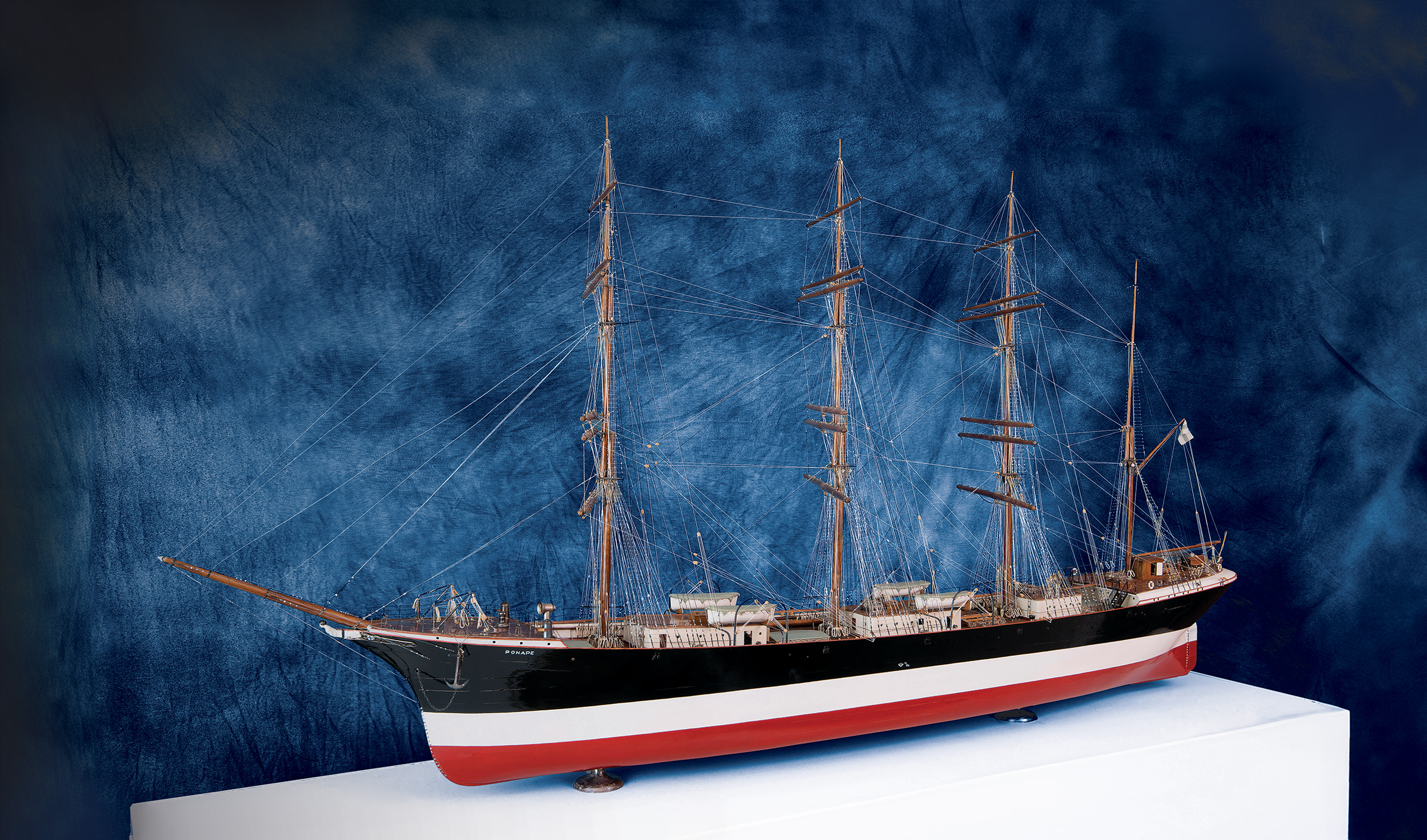
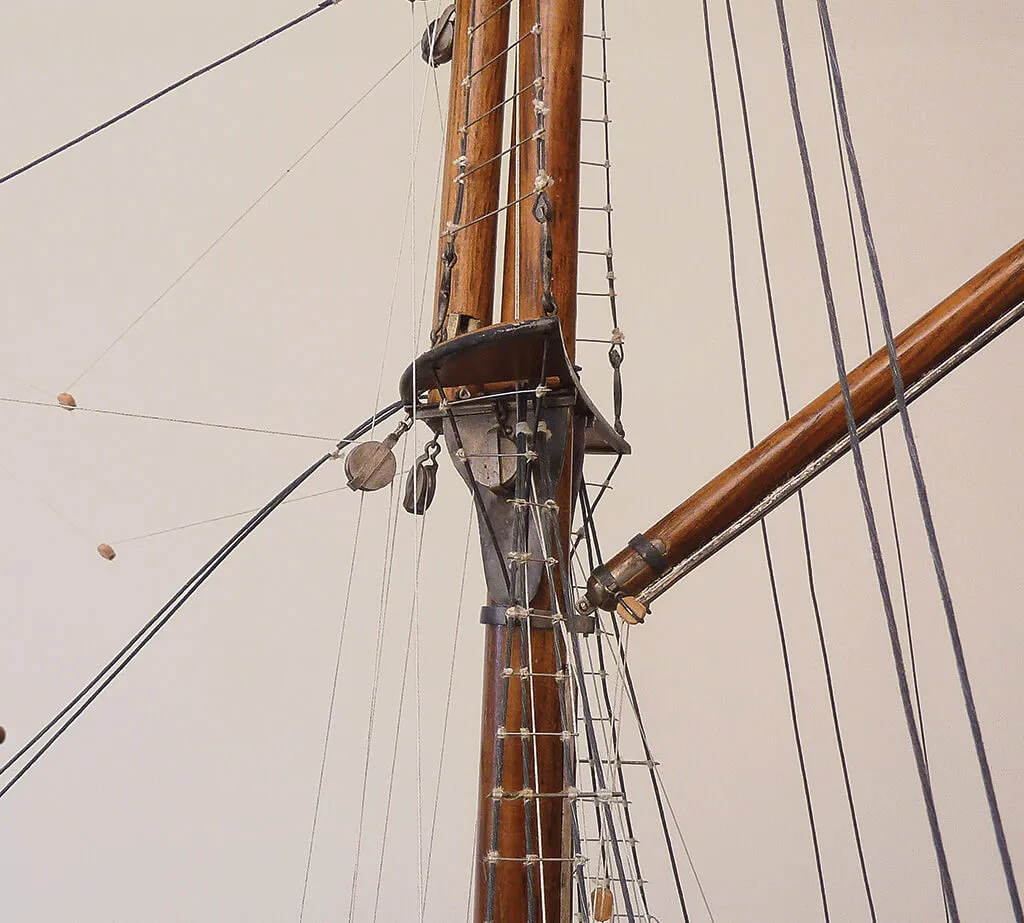
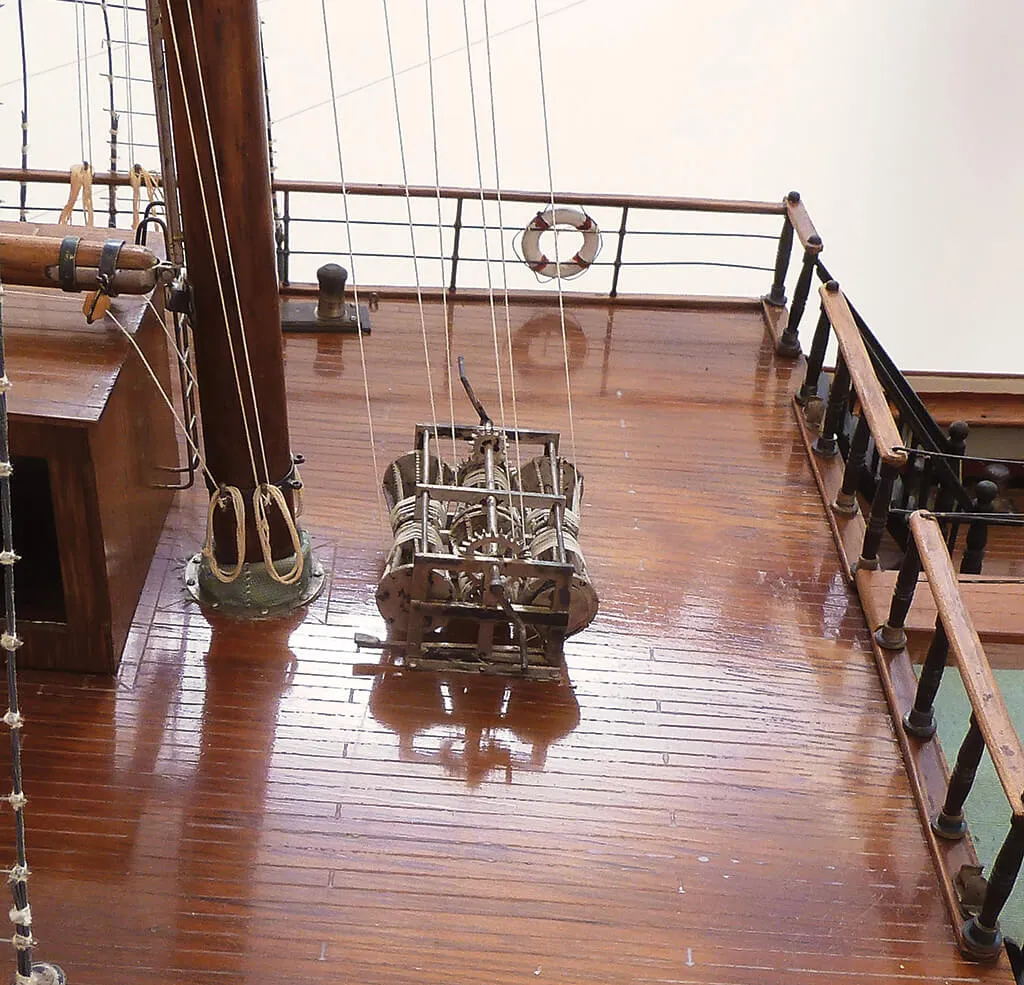
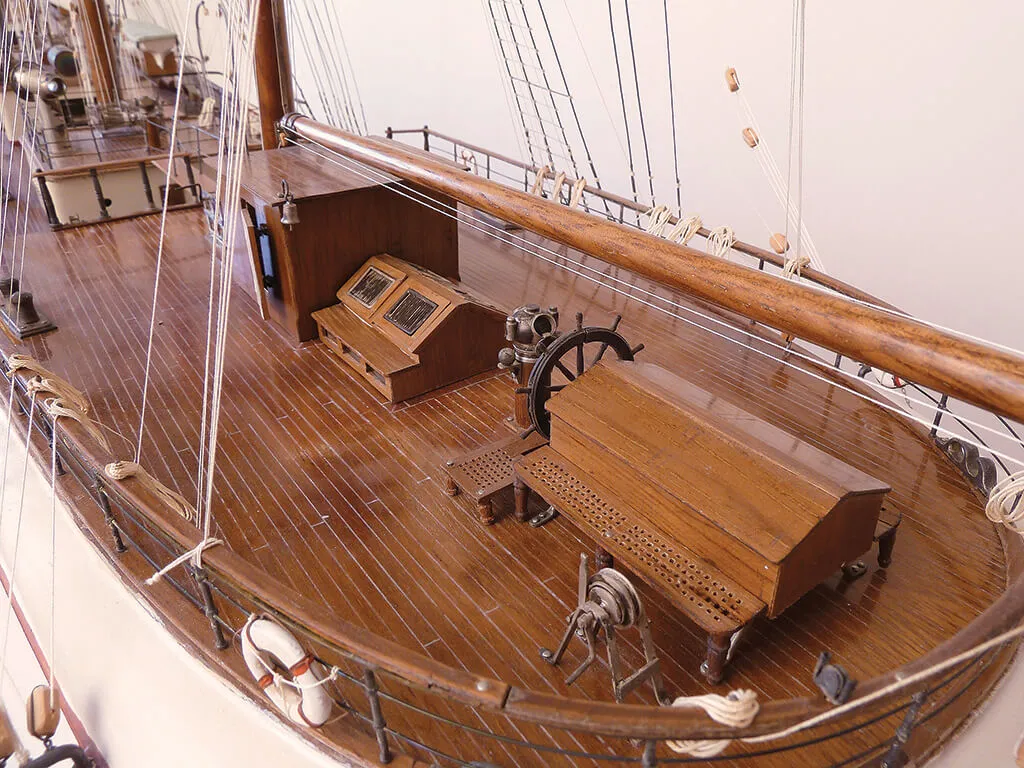
Runar must have had an exceptionally good memory because, after only a few months on board the Ponape, he was able to create a very detailed model of the ship. There were photographs, but no drawings. A major problem was how to find materials to build with.
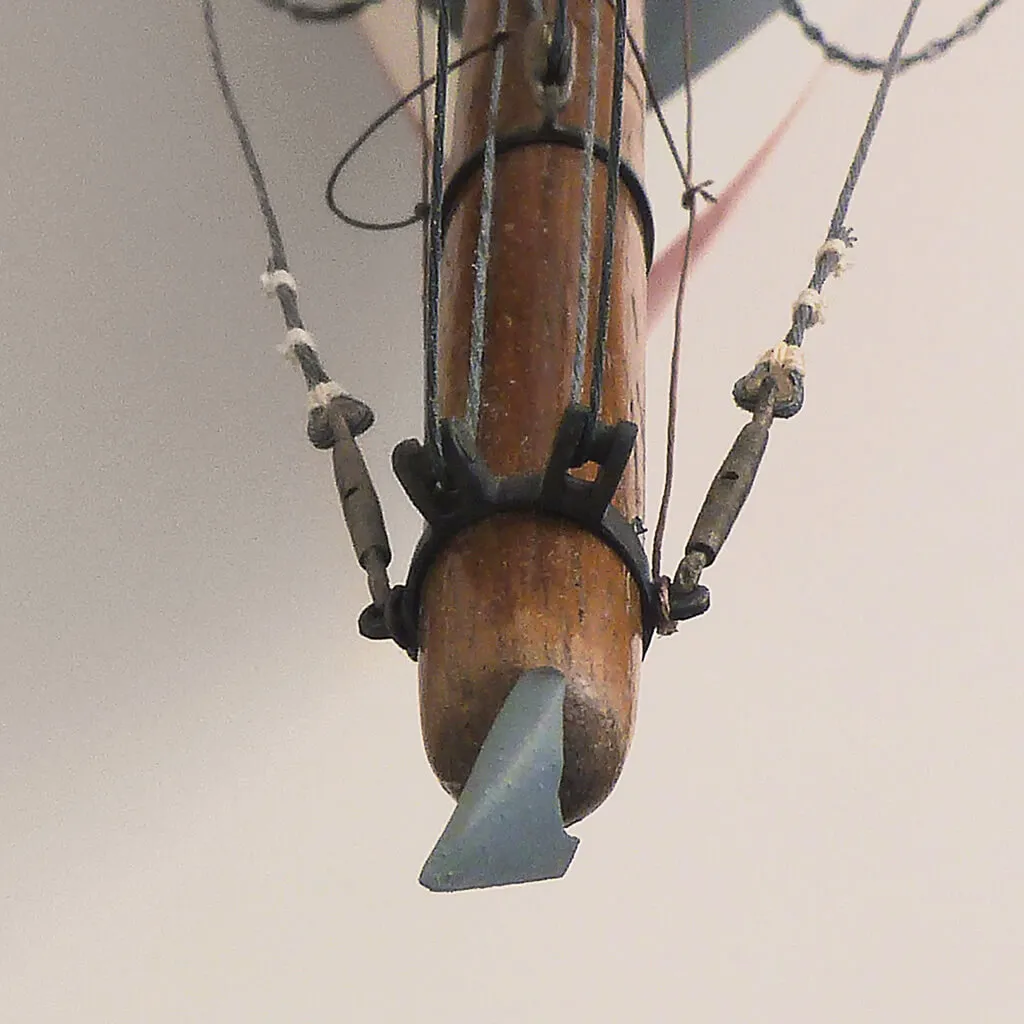
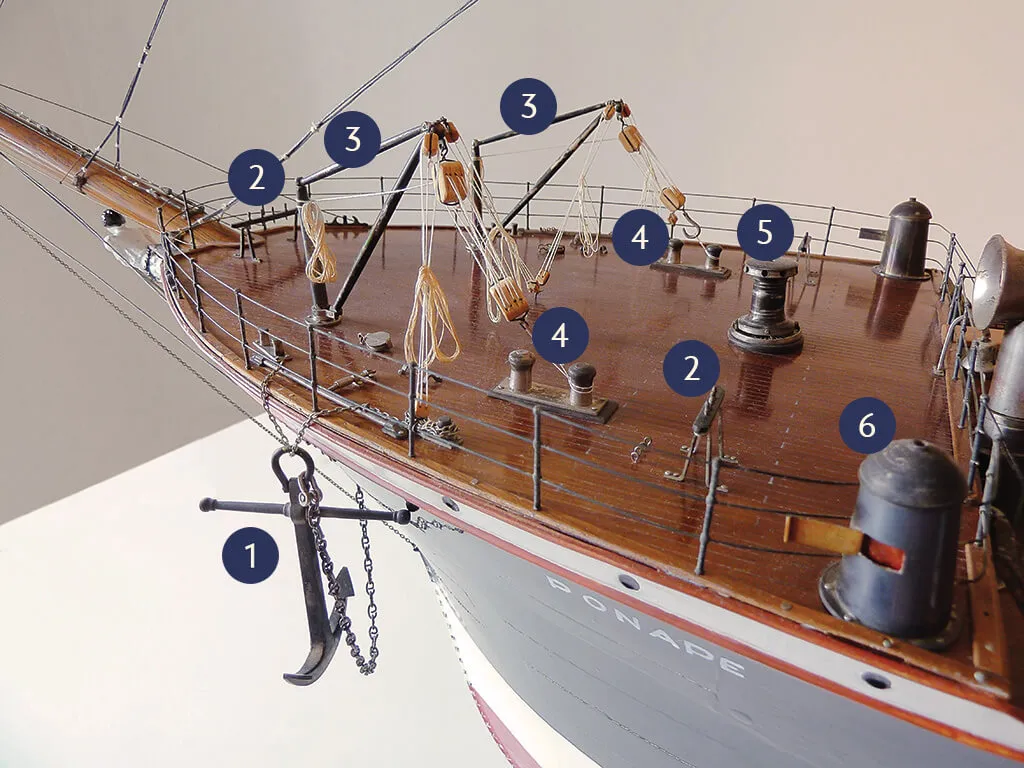
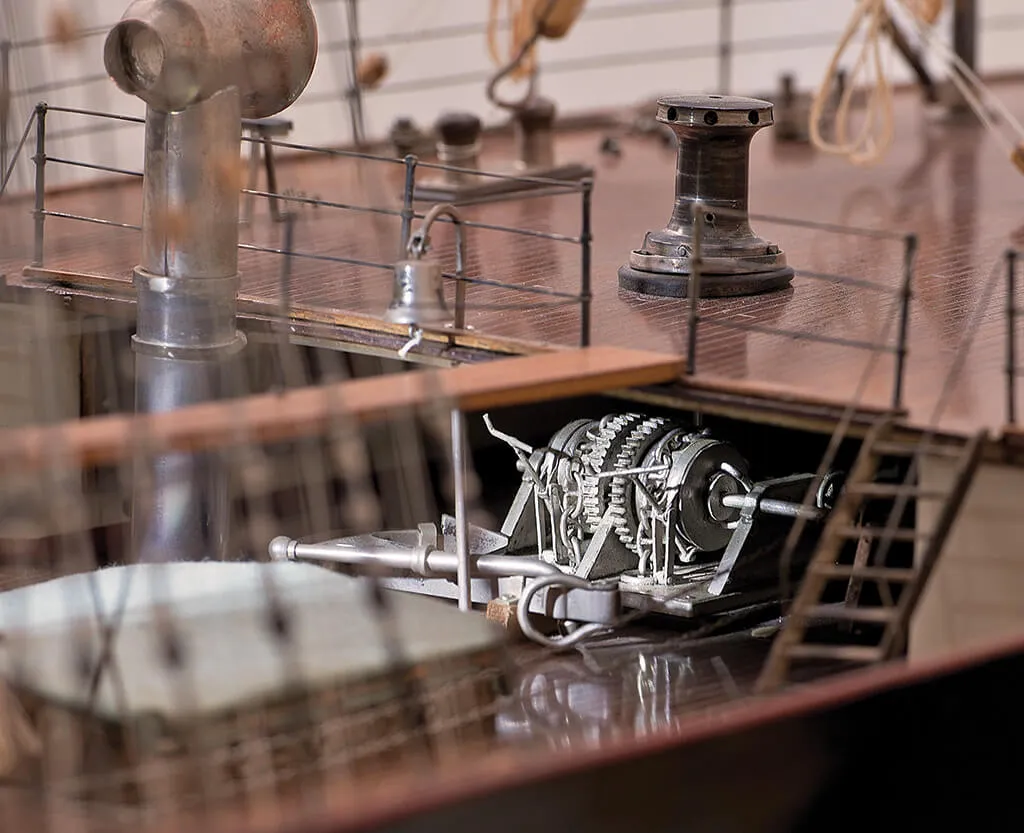
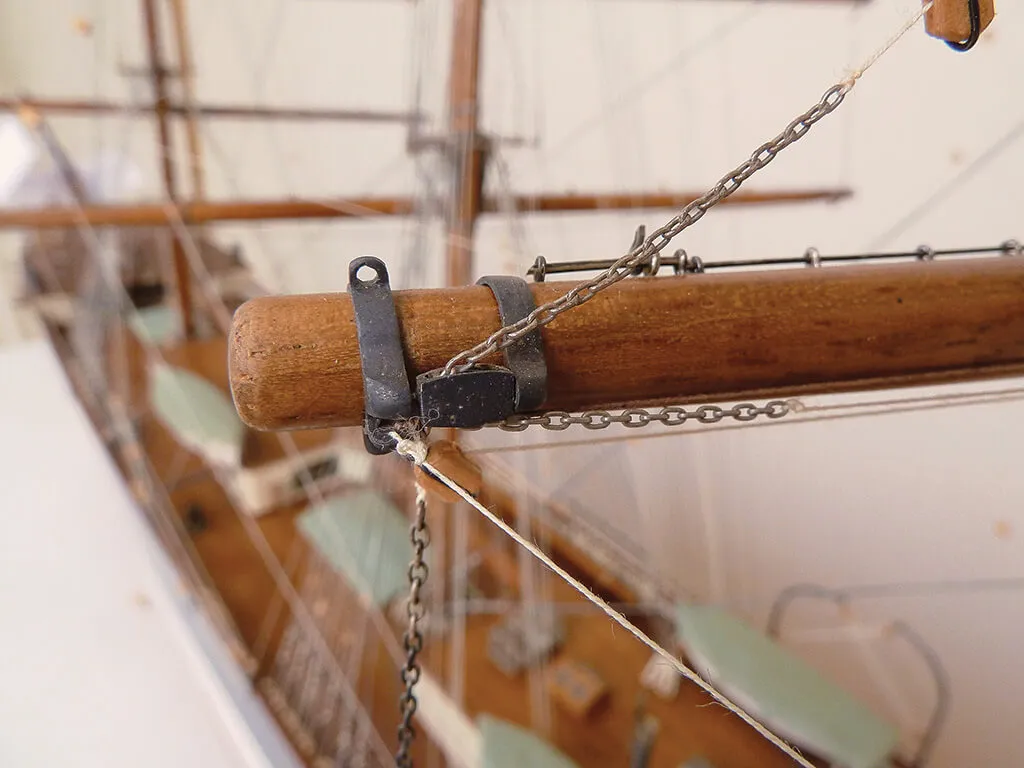
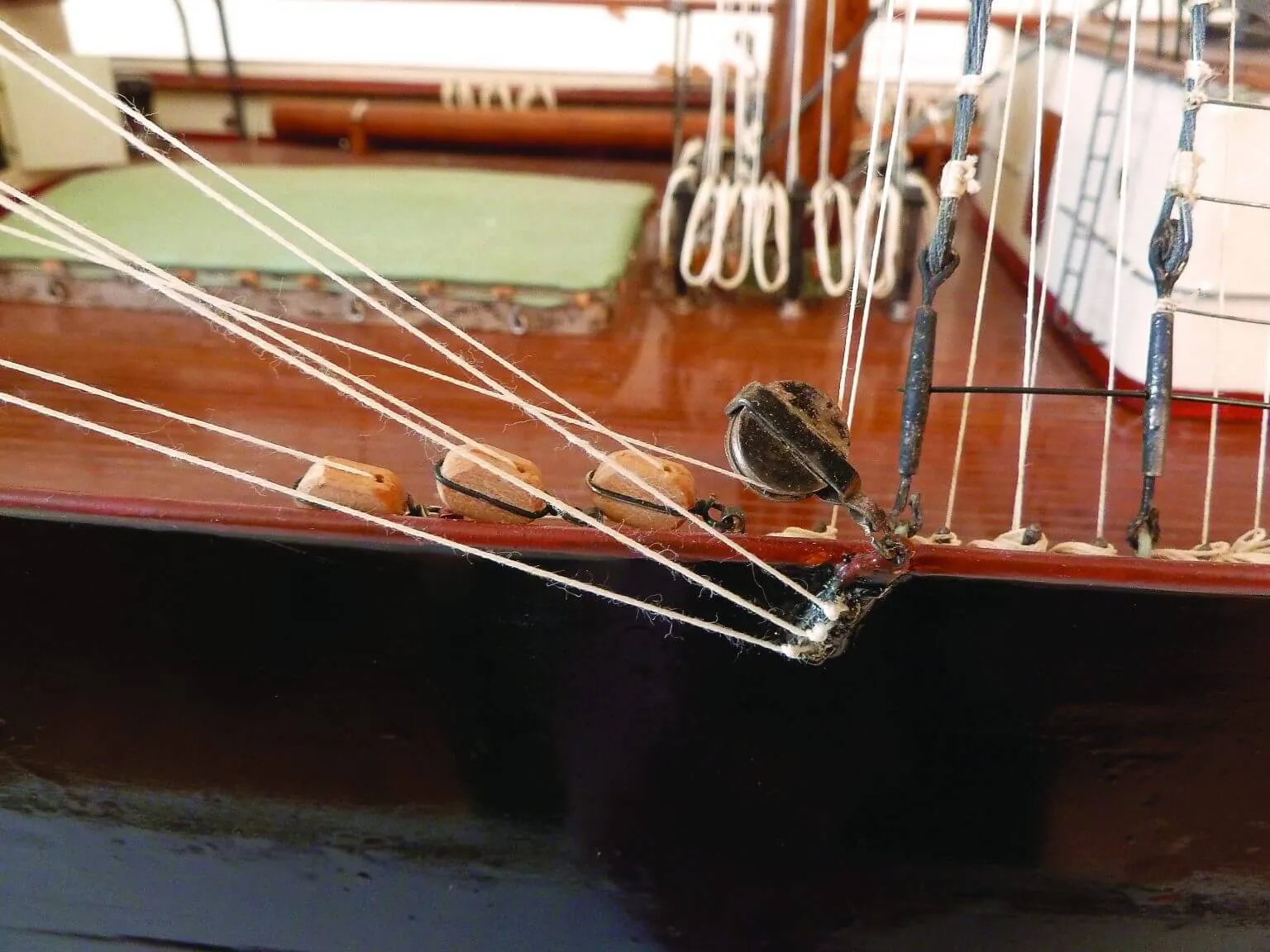
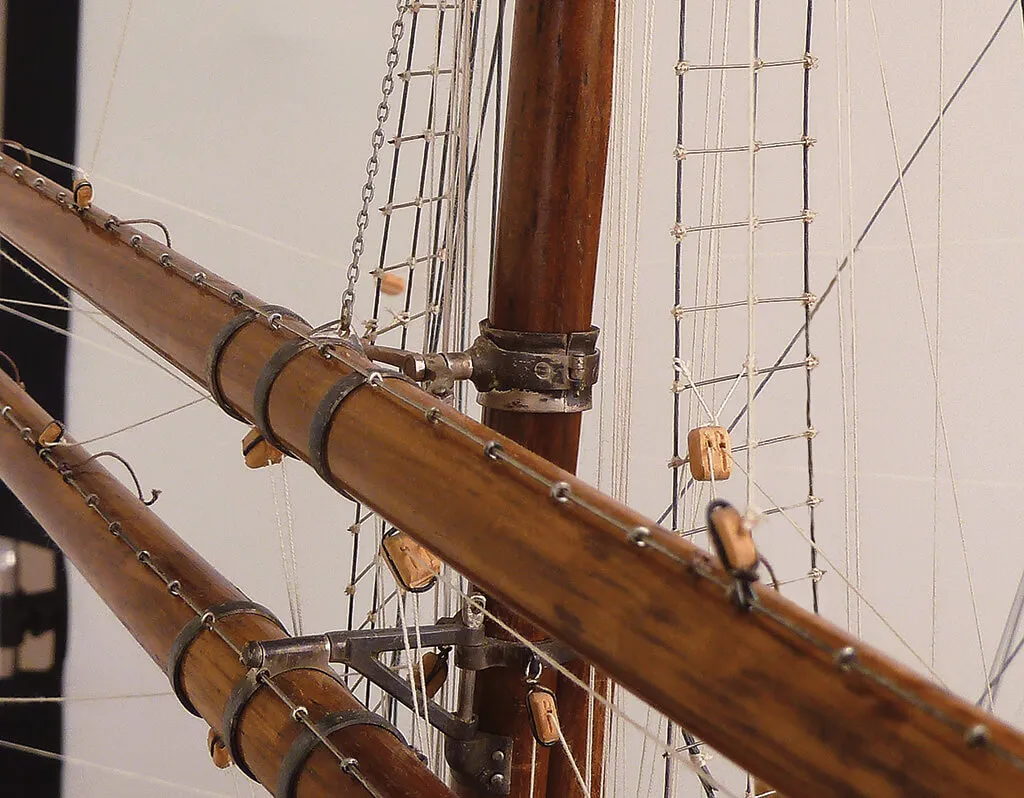
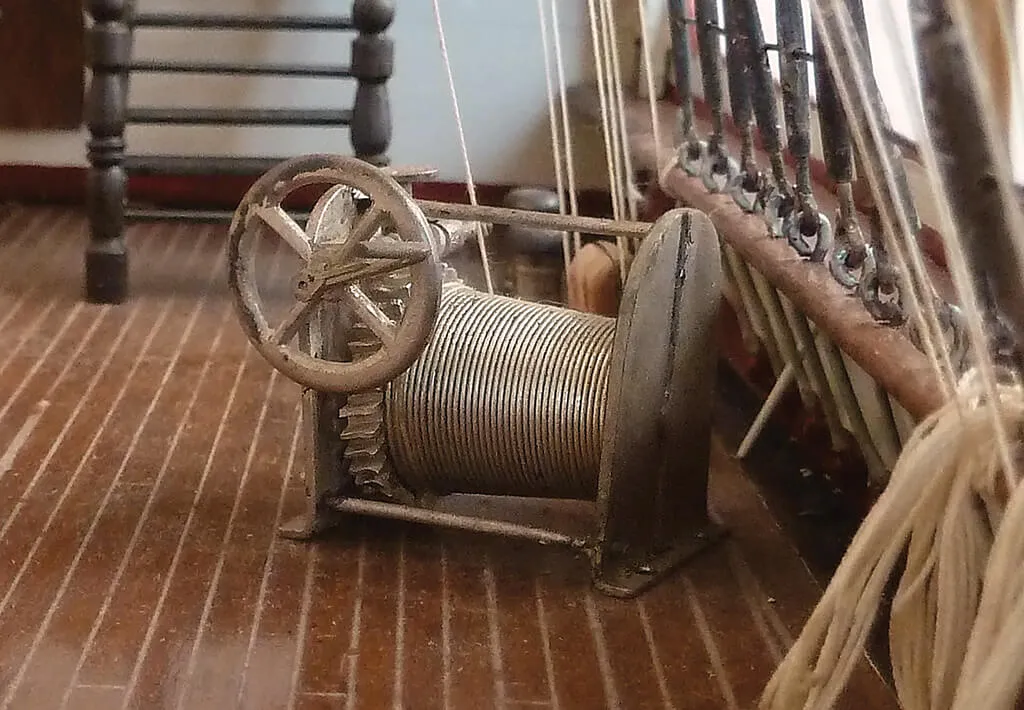
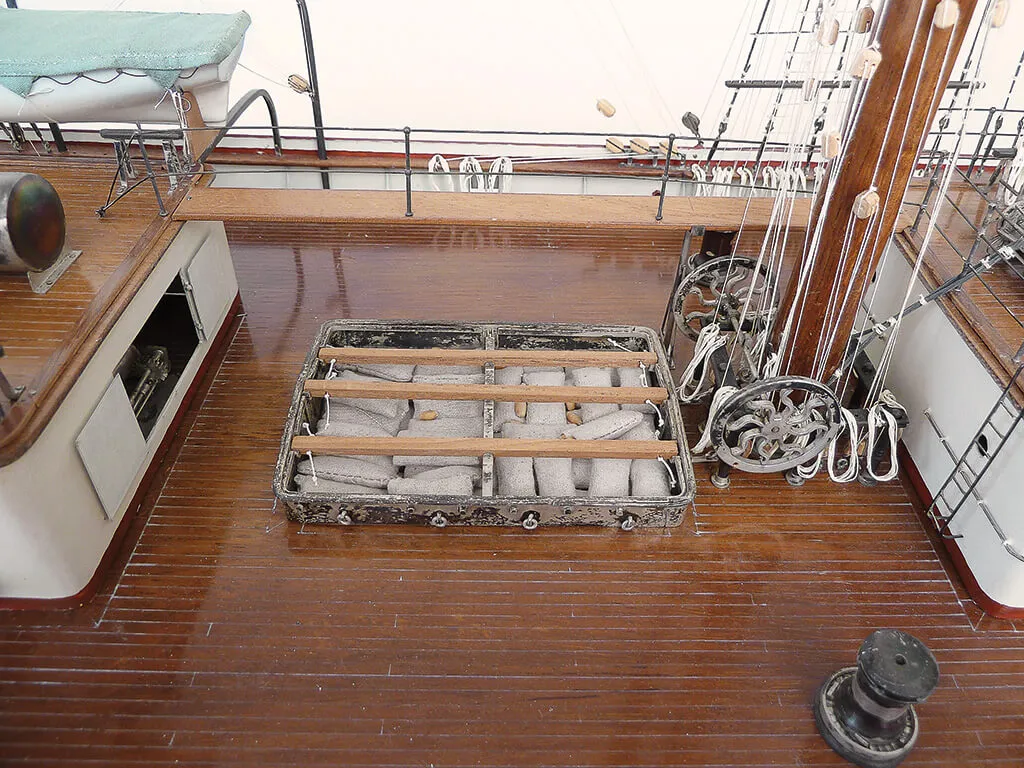
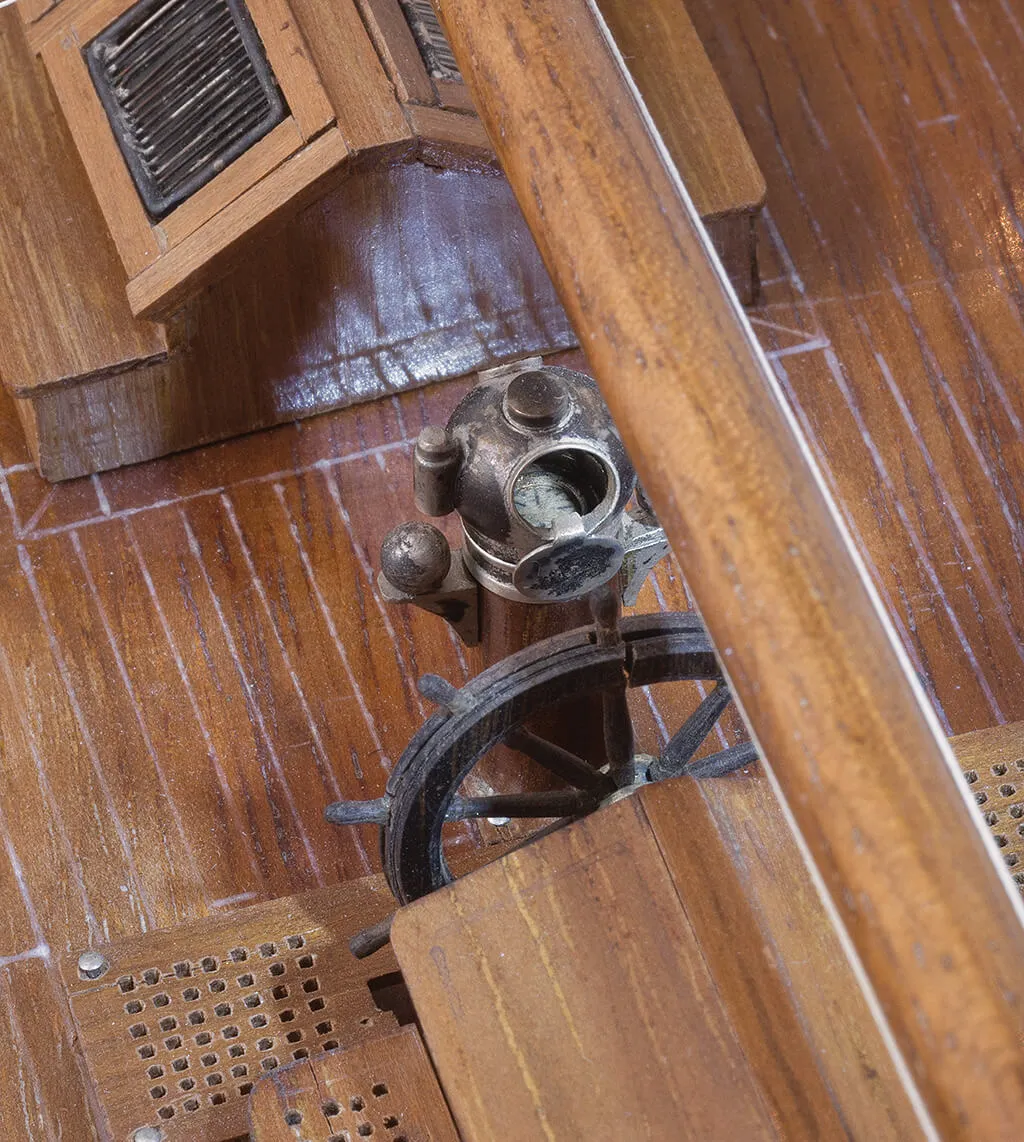
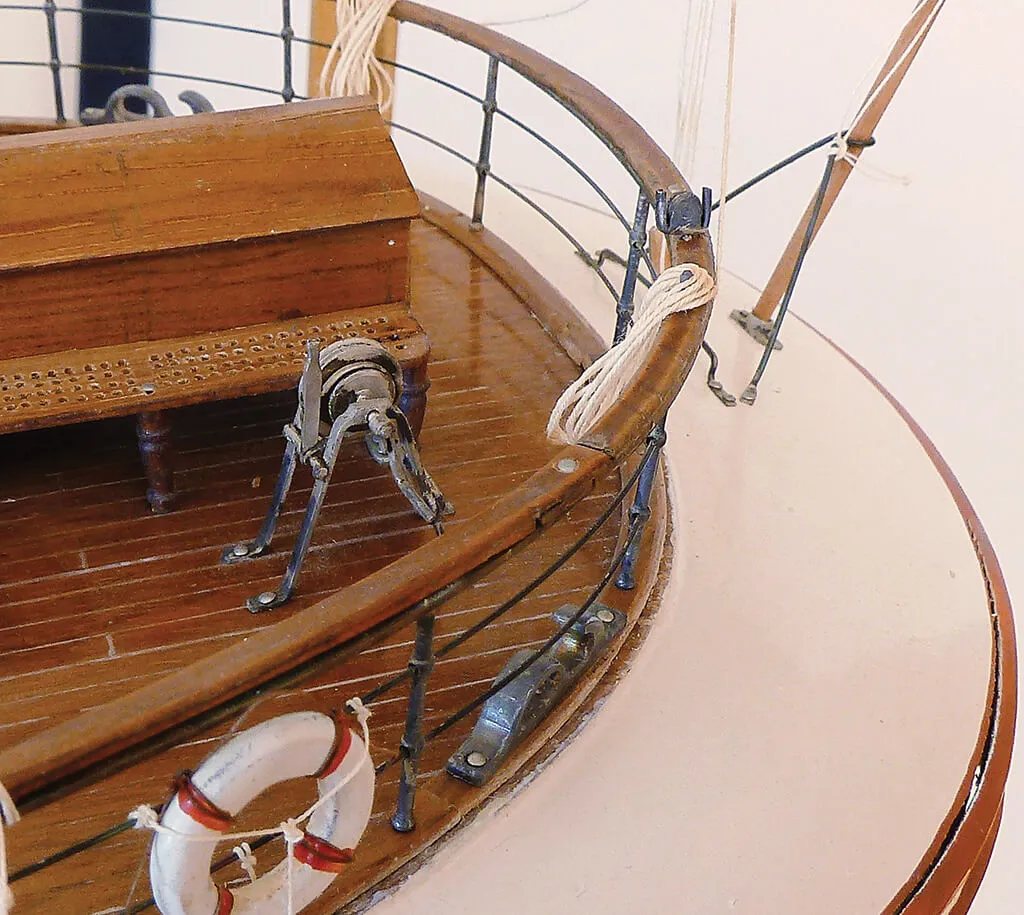
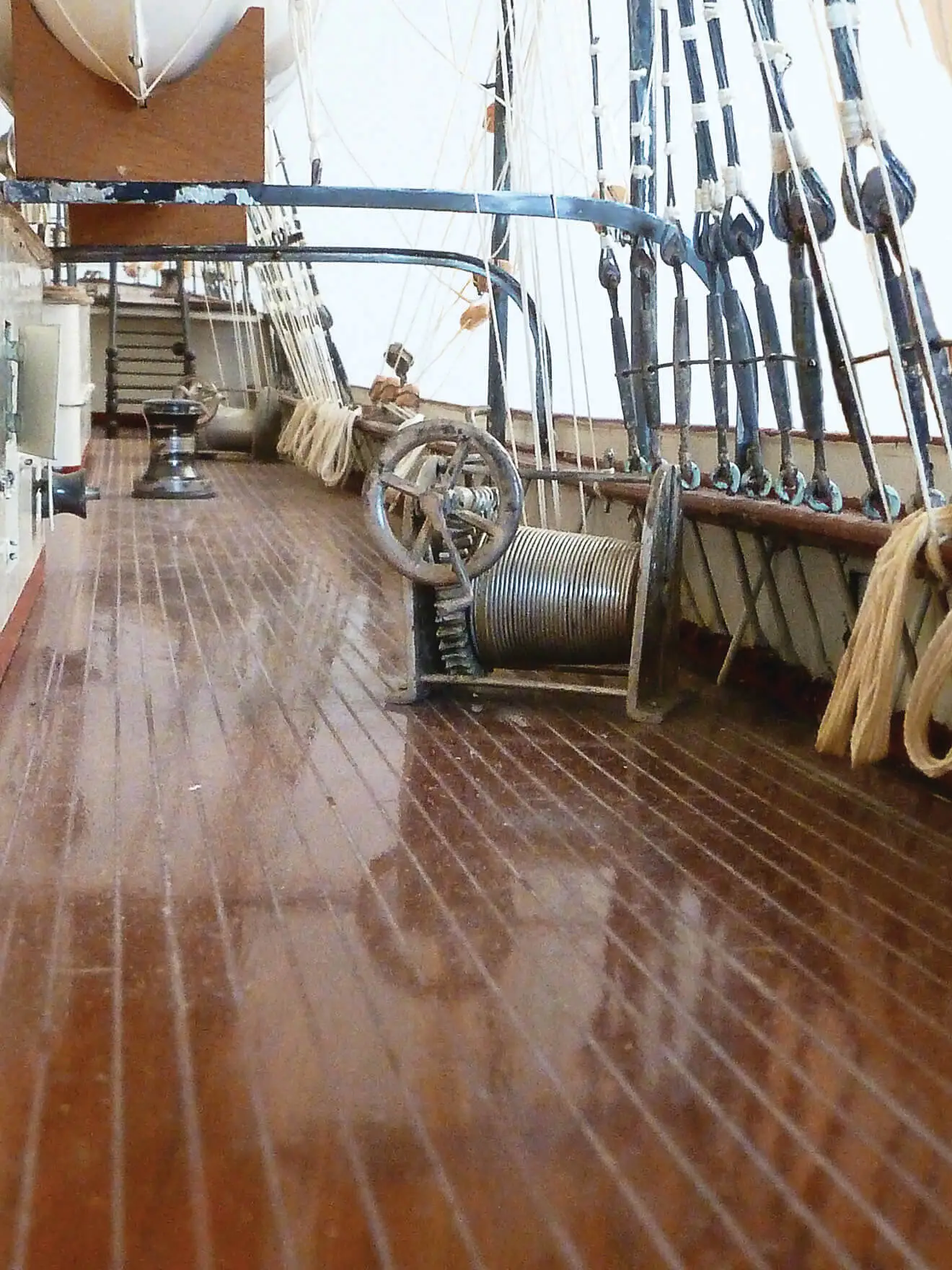
The solution eventually came in the form of a discarded iron bed, which Runar came across during one of the walks the prisoners were allowed to take under supervision. The bed had solid brass bars about two inches thick that held the tops in place, brass that could become material for winches, windlasses, capstans, blocks and so on. Runar had to buy the bed and now began a job that took him years to complete.
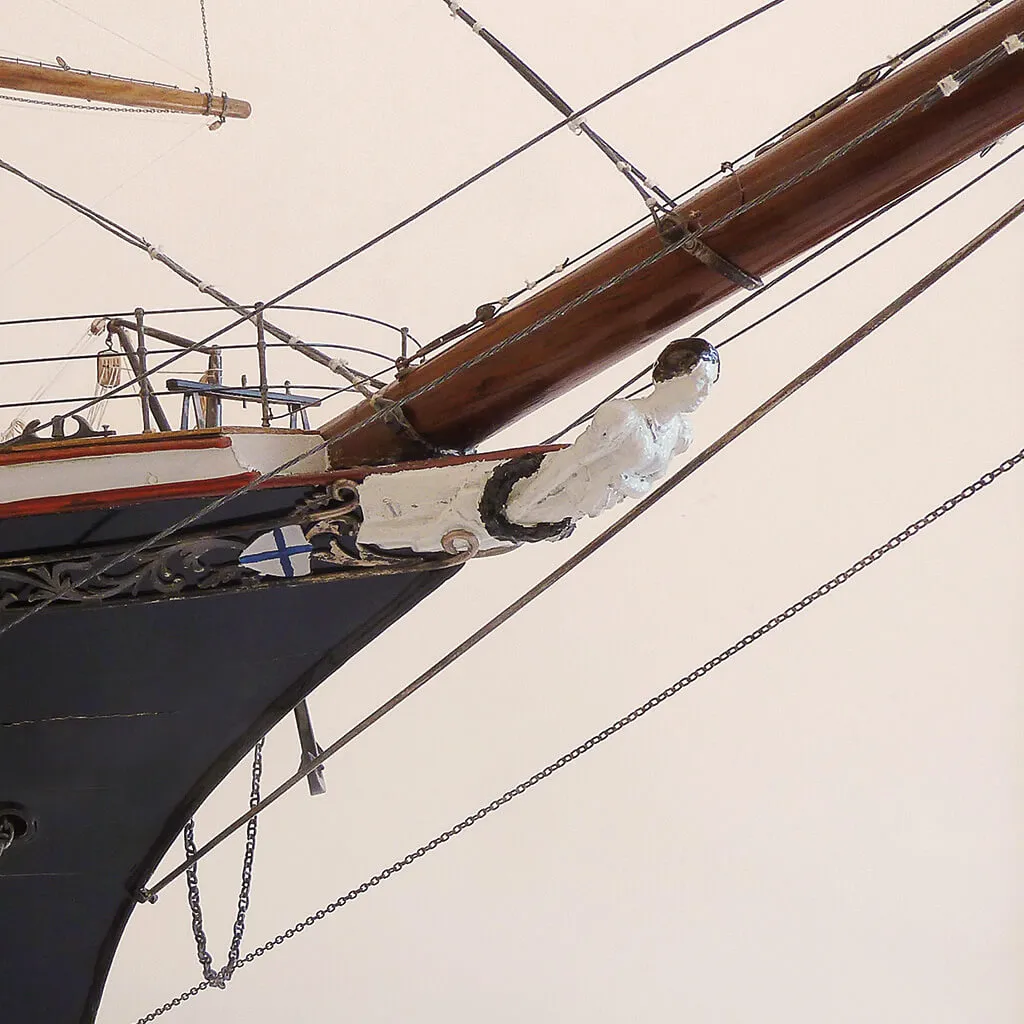
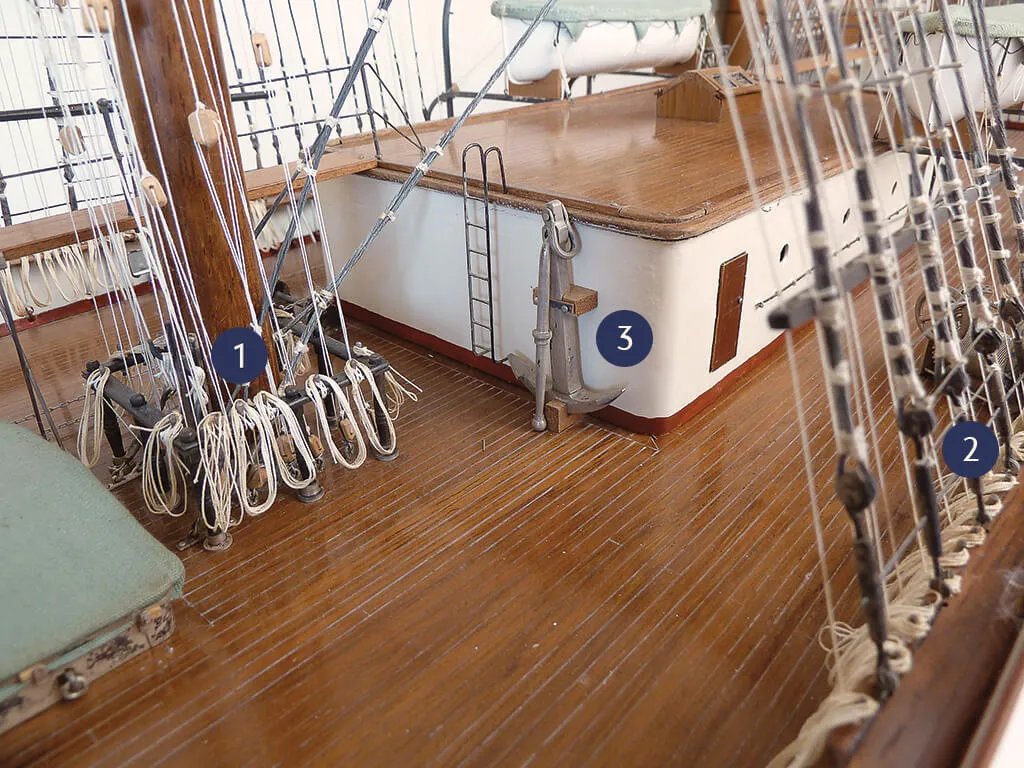
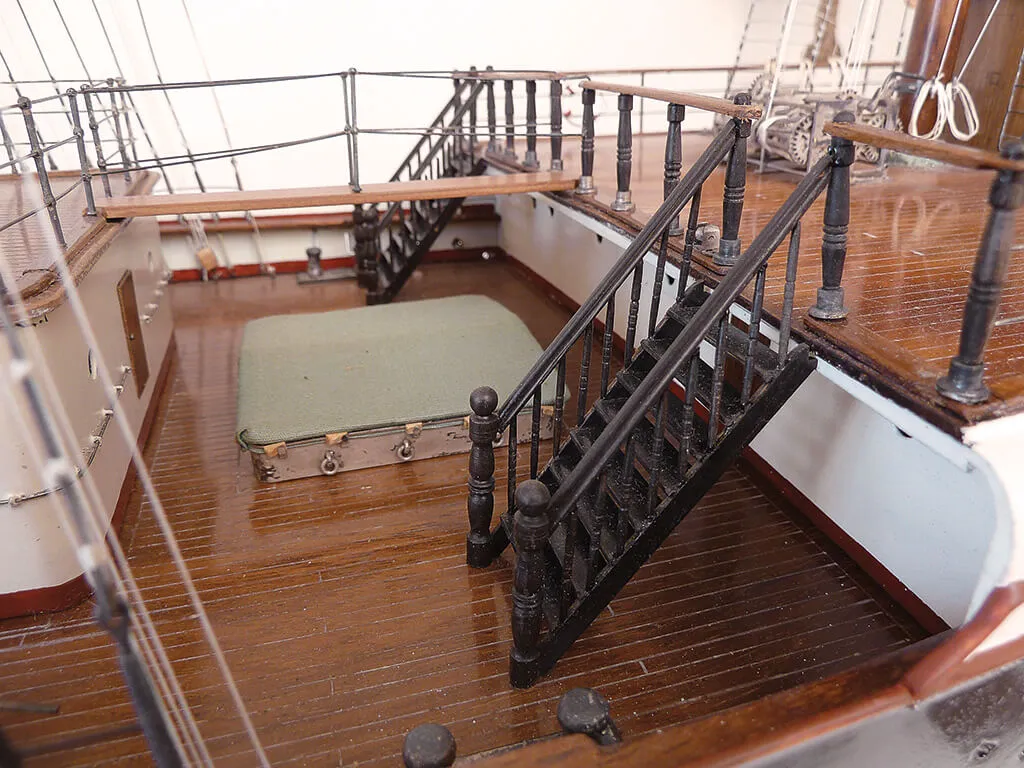
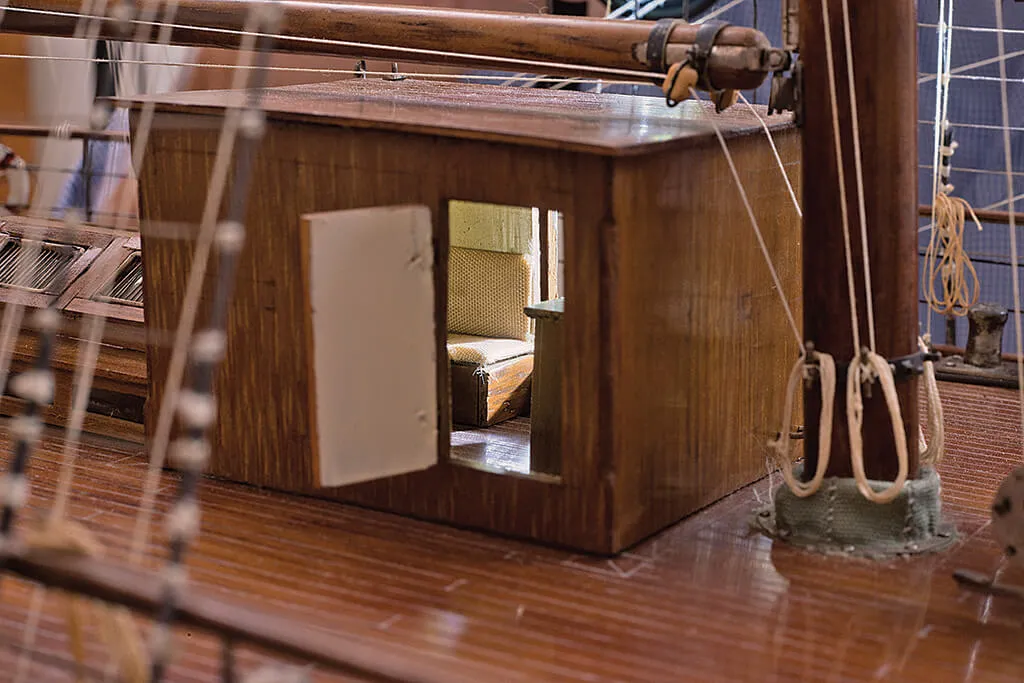
The hull was built from wide planks, the masts from teak. Runar’s ambition for the model was very high and the work can be seen as a quest for perfection. All details on the deck had to be functional and the model had to be equipped with three working halyard winches.


Runar returns to Åland
In September 1944, Finland made peace with the Soviet Union and Runar was released. He came home to Åland on Boxing Day and met his four-year-old son Kaj for the first time.
It took time to get Ponape home in its 2.5-meter-long box. Eventually the transport box arrived, but there was no time to assemble the model. The box stood untouched for almost ten years. In the summer of 1954, it was time to finish building the model. Runar took time off from his work at sea and worked 18 hours a day. Finally, the model of the Ponape was completed.
The model is built in 1:40 scale and is 226 cm long.